Hara’s upcoming exhibition The Promises of Monsters, opening March 2026, explores the representation of bodies and states of being deemed monstrous, foregrounding gendered forms both human and more-than-human.
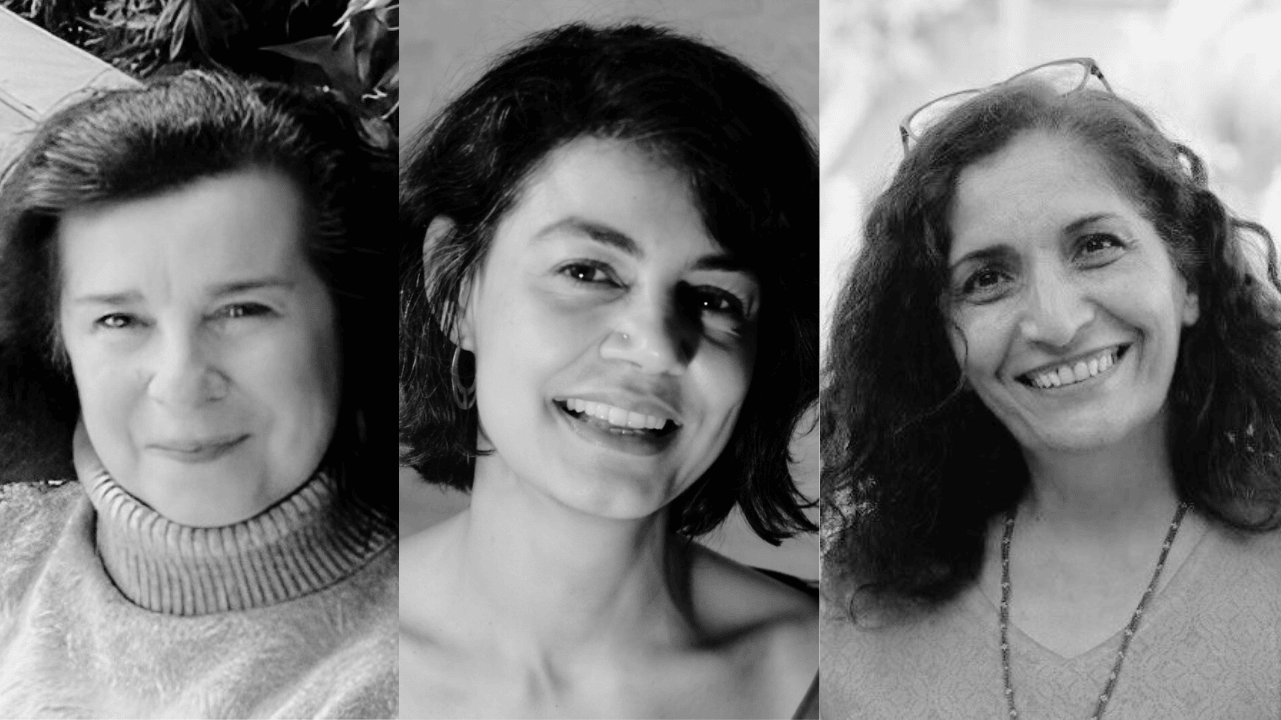
The second event of the exhibition’s public programme invites Kıymet Erzincan Kına, Emine Ayhan and Özlem Öğüt Yazıcıoğlu to discuss how healer women, witches and shamans have been understood across different times and places, and how these figures have been shaped through processes of othering and demonisation.
Time: 14:00 to 17:00
Free entry
To attend, please register by emailing [email protected]
Entry to Hara is free for visitors with a confirmed registration.
A shuttle service will run from Hacıosman metro station. Participants wishing to use the shuttle must book by 19 December.
For reservations and information: +90 532 669 4821
Kıymet Erzincan Kına
Reading Umay Ana through the Stories of Al Karısı
The fear of the sun’s yellow rays and the red hues of fire and menstrual blood gave rise to the dark, cautionary stories told about Al Karısı. But who were these stories really meant to silence? Did they truly erase women’s life-giving, sustaining and healing hands, or did they simply conceal a deeper truth within myth? This talk asks how these narratives might be read differently today, and what they reveal when approached with care rather than fear.
Born in Erzurum in 1968, Kıymet Erzincan Kına studied American Culture and Literature at Istanbul University. She was a member of the editorial board of Aykırı, a culture and arts magazine. Alongside numerous translations, she published From Umay Ana to Al Karısı: Those Who Arrive on Horseback and Leave on Foot in 2022, now in its second edition. Her writing and translations have appeared in journals, edited volumes and online platforms. Having retired from her post as a lecturer at Yıldız Technical University’s School of Foreign Languages, she is currently a member of the Writers’ Union of Turkey.
Emine Ayhan
In early capitalist Europe, witchcraft emerged not as a fixed belief, but as a discursive construction shaped at the crossroads of religion, science and law, all responding to the needs of an increasingly centralised political and theological authority. In England in particular, the language of witchcraft became central to demonology and eschatology, fields that accompanied the rise of new forms of knowledge, belief and power. These included the emergence of a new science and philosophy, a new religious order, a new political sovereign and a new secular legal framework.
Within this process, popular and collective forms of knowledge were systematically redefined. Landless populations perceived as a threat were recast as witches or heretics, practical understandings of nature were turned into accusations of black magic, and lived, bodily experience was displaced by abstract metaphysics. Drawing on Shakespeare’s Macbeth, this talk considers how symbolic and interpretive power was transferred to political authority through the figure of the witch, and how the rhetoric surrounding witchcraft continues to shape aesthetic and political imaginaries.
Emine Ayhan graduated from Ankara University’s Department of English Language and Literature in 2004 and completed postgraduate coursework in Systematic Philosophy and Logic at the same institution. She received her MA in Comparative Literature from Istanbul Bilgi University with a thesis on Ahmet Hamdi Tanpınar and national allegory. She has translated works by authors and thinkers including Lewis Hyde, Wendy Brown, Svetlana Boym, Alasdair Gray, Terry Eagleton, Spinoza and William Shakespeare. She has also translated and edited critical editions of seven Shakespeare plays, and regularly writes and teaches on literature and theatre.
Özlem Öğüt Yazıcıoğlu
Healing the Present through Shamanic Ways of Seeing
This talk reflects on what shamanic traditions might offer in a time of ecological crisis. While often associated with pre-modern Central Asian societies, shamanism has taken many forms across Northern Europe, the Americas, Australia and Africa. Although these practices were largely eroded through colonial histories and later absorbed into global capitalism, they rest on an animist worldview that resists human-centred thinking. Instead, they emphasise interconnectedness, dependency and relationship across all forms of life.
By revisiting these perspectives, the talk considers whether shamanic ways of understanding the world might open up alternative paths towards care and repair in the present moment.
Özlem Öğüt Yazıcıoğlu holds BA and MA degrees from Boğaziçi University and a PhD in Comparative Literature from Purdue University. She is a faculty member in the Department of Western Languages and Literatures at Boğaziçi University, where she teaches modern and contemporary fiction, ecocriticism and literary theory. Her research focuses on literature addressing ethnic identity, speciesism, sexism and racism. She is the author of Major Minor Literature: Animal and Human Alterity (Simurg, 2017) and Shamanism in the Contemporary Novel: Stories Beyond the Nature Culture Divide (Rowman and Littlefield, 2022).